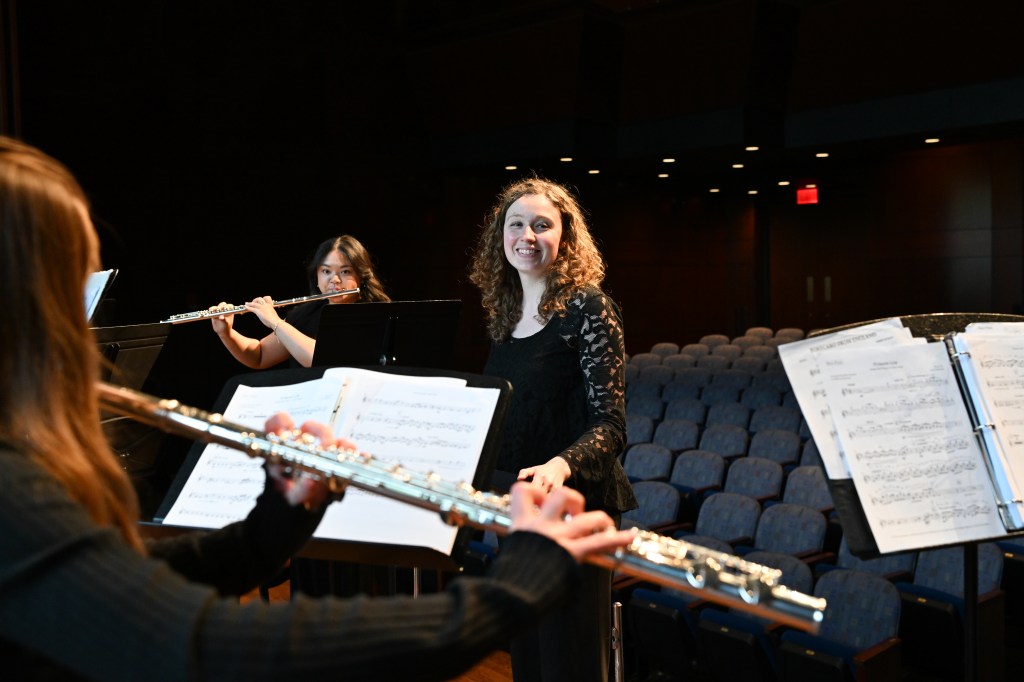
The concept of the ‘whole flutist’ is the focal point of my compassionate and encouraging teaching style. I do this through mentoring my students through the technical, musical, and emotional aspects of music. For example, I ensure that my students have a strong foundation in the fundamentals of music such as: rhythm, tone, technique, intonation, correct posture/hand position, embouchure, musicality, and phrasing. In lessons we also discuss music theory and music history and how it applies to the music as well as productive practice habits.
Dialoguing with my students to determine their individual goals and implementing a realistic plan to meet those goals is part of my ‘whole flutist’ approach. This is an open dialogue and I check in with students periodically to see if the plan needs adjusting or their goals have changed. Meeting students where they are and determining their needs is an important aspect to my teaching style.
Mentoring students through the mental and emotional trials of music is another aspect of my ‘whole flutist’ teaching approach. An illustration of this is helping my students work though musical difficulties such as: how to audition well, how to rebound from failures, and how to manage performance anxiety in a healthy way.
I take a few minutes each lesson to connect with my students on a personal level by asking them about their week, how their most recent performance went, how school is going, etc. Getting to know my students as not just musicians but also individuals is one of my favorite aspects of teaching.
Lastly, creating performing opportunities for my students such as twice yearly studio recitals, and encouraging them to participate in ILMEA, Solo and Ensemble, local youth orchestras, school music extracurriculars, and Chicago Flute Club events are crucial to the growth of the ‘whole flutist’.